
DCS-7342-32D2X — Layer 3 32-Port 400G QSFP-DD + 2-Port 10G SFP+ Managed AI Data Center Switch
Layer 3 32-Port 400G QSFP-DD + 2-Port 10G SFP+ Managed AI Data Center Switch
Confirma disponibilidad, instalación y entrega con un asesor.
Descripción
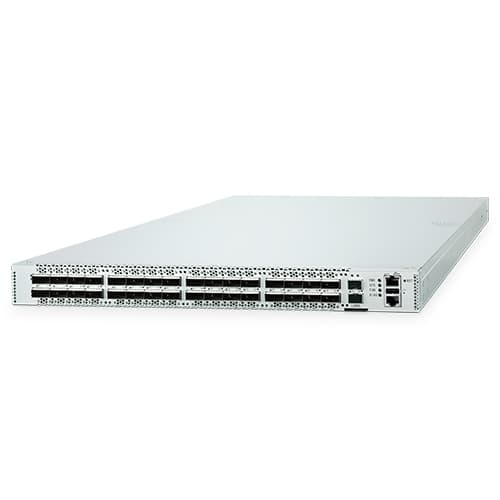
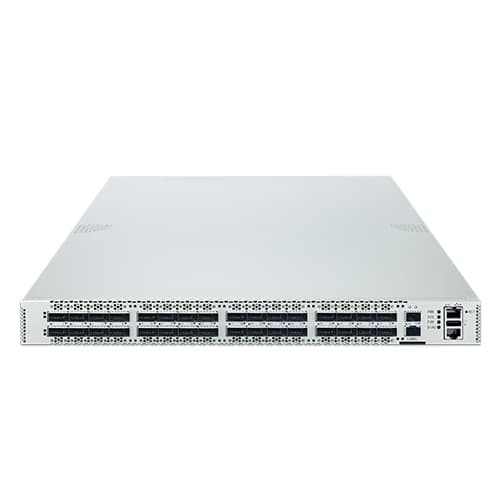
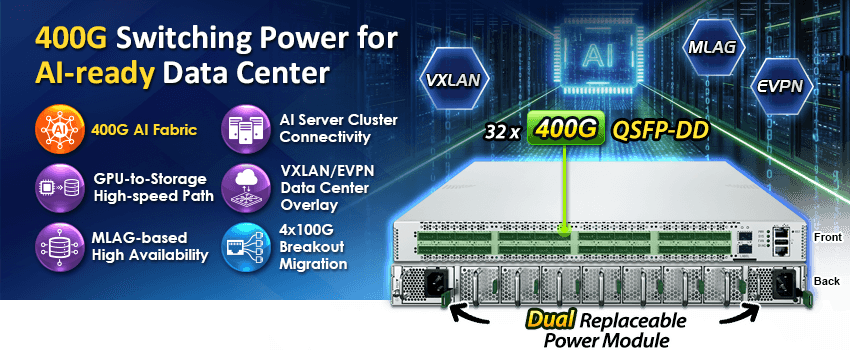
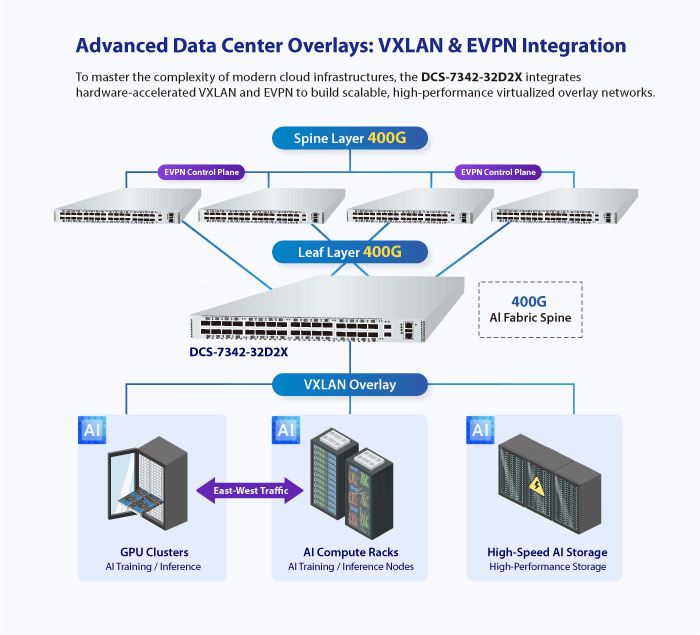
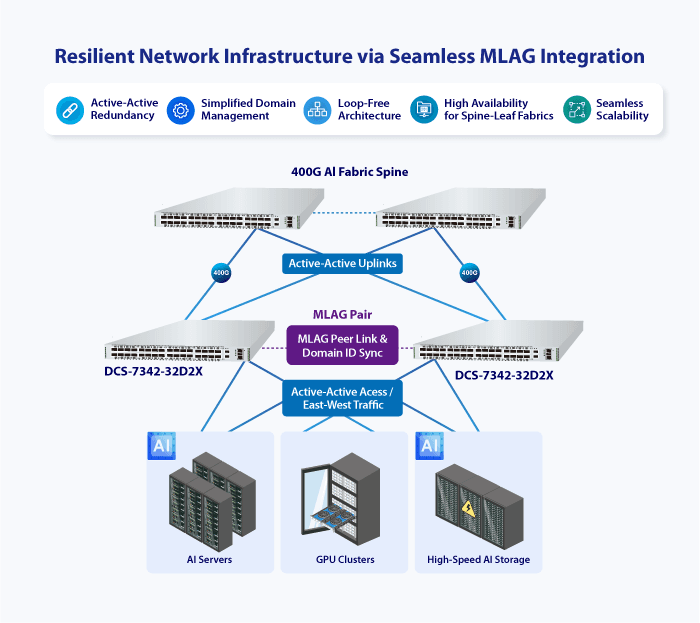
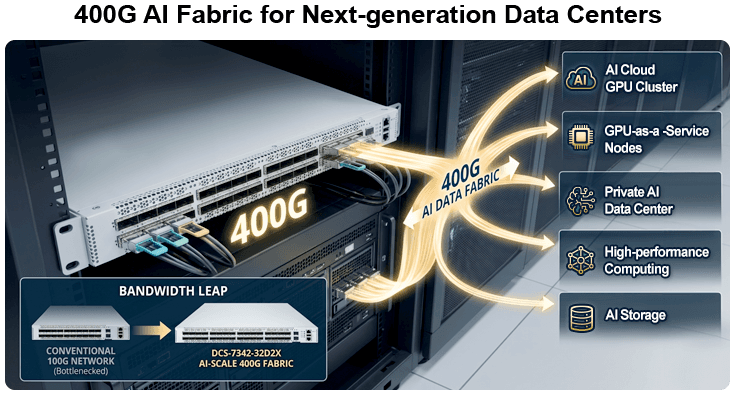
PLANET is proud to introduce the DCS-7342-32D2X, a Layer 3 32-port 400G QSFP-DD and 2-port 10G SFP+ Managed AI Data Center Switch designed for next-generation data center fabrics where AI servers, GPU clusters, high-speed storage and East-West traffic require massive bandwidth. Unlike a conventional cloud data center switch that primarily expands the server aggregation backbone, the DCS-7342-32D2X is positioned for AI-scale infrastructure. It provides a high-density 400G switching foundation for AI training, distributed inference, GPU-to-GPU communication, AI storage fabrics, high-performance computing, and 400G spine-leaf architectures. With 32 x 400G QSFP-DD interfaces, advanced Layer 3 routing , VxLAN/EVPN virtualization, MLAG redundancy, ECMP load balancing, BGP/OSPF/IS-IS routing and carrier-grade management, the DCS-7342-32D2X helps organizations transition from cloud networking to AI-ready data center fabric without requiring an open system NOS such as SONiC. For environments migrating from existing 100G infrastructure, the 400G QSFP-DD design can also support flexible 400G-to-4 x 100G breakout deployment models, enabling native 400G AI servers and 100G leaf/server connections to coexist in a phased upgrade architecture. Future-ready AI Data Center Interconnects: Advanced L3 Routing & Virtualization The DCS-7342-32D2X is a high-performance Layer 3 data center switch engineered for AI-driven, high-speed and scalable environments. With a high-density configuration of 32 x 400G QSFP-DD ports, it serves as a foundation for AI fabric spine, 400G aggregation, high-performance computing and next-generation data center deployments. Massive Routing Capacity: optimized to support large-scale IPv4/IPv6 routing tables, facilitating expansive topologies and intensive control-plane workloads. Final entry count must be verified. Advanced Dynamic Routing: supports IPv4/IPv6 routing protocols including OSPFv2/v3, BGP4/BGP4+ and IS-IS for scalable inter-subnet communication. Next-generation Data Center Overlays: VxLAN and EVPN enable flexible, multi-tenant virtualized overlay networks for AI/cloud fabric deployment. Carrier-grade Resilience: BFD, ERPS, VRRP and MLAG enhance service continuity and reduce single points of failure across mission-critical fabrics. Intelligent Traffic Management: ECMP, PBR, QoS and multicast routing help optimize bandwidth utilization across GPU clusters, storage fabrics and data center services. Robust Security Infrastructure: TACACS+, RADIUS, SSH, 802.1X, ACL and control-plane protection help safeguard critical data center management and traffic paths. Advanced Data Center Overlays: VxLAN & EVPN Integration To master the complexity of modern cloud infrastructures, the DCS-7342-32D2X integrates hardware-accelerated VxLAN and EVPN to build scalable, high-performance virtualized overlay networks. Efficient Virtualization: VxLAN encapsulates L2 frames into L3 UDP packets, supporting up to 16 million isolated logical networks across a physical IP fabric. BGP-Driven Control Plane: Leveraging EVPN with BGP, the system intelligently distributes reachability info to minimize broadcast flooding and optimize traffic. Seamless Workload Mobility: Maintains L2 connectivity during VM or container migration across physical hosts, ensuring uninterrupted service delivery. Optimized Routing: Supports Integrated Routing and Bridging (IRB) and advanced multicast (PIM-SM/SSM) for efficient inter-segment traffic flow. Secure Multi-Tenancy: Features VFI (Virtual Forwarding Instance) to provide isolated, secure environments for multiple tenants over a shared infrastructure. Wire-Speed Hardware: The architecture handles all encapsulation at wire-speed, delivering ultra-low-latency forwarding for high-throughput applications. Resilient Network Infrastructure via Seamless MLAG Integration To ensure non-stop network services and maximize bandwidth utilization, the DCS-7342-32D2X supports advanced MLAG (Multi-Chassis Link Aggregation). This technology delivers carrier-grade reliability and architectural flexibility for mission-critical infrastructures. Active-Active Redundancy: MLAG allows two switches to function as a single logical entity, enabling active-active link aggregation for seamless traffic failover. Simplified Domain Management: Administrators can easily configure and identify the MLAG cluster through the Domain ID setting, ensuring synchronized and stable control-plane operations. Loop-Free Architecture: By leveraging MLAG with LACP, the network eliminates the need for Spanning Tree Protocol (STP) on access links, resulting in higher bandwidth efficiency and near-instant convergence. High Availability for Spine-Leaf Fabrics: MLAG enhances resilience at the leaf layer, providing redundant paths to ensure that a single chassis failure never interrupts data flow. Seamless Scalability: The combination of MLAG and hardware-based load balancing allows for linear bandwidth scaling as your data center infrastructure grows. Carrier-Grade Resilience for High-Scalability Network Environments PLANET delivers a high-density, carrier-grade switching solution engineered to dominate the rigorous traffic demands of modern scalable networks. By integrating advanced Layer 3 software with next-generation hardware, this platform ensures seamless expansion and unwavering stability. Scalable Layer 3 Routing Infrastructure: Supports a comprehensive suite of routing protocols, including BGP, OSPF, and IS-IS, allowing for flexible and efficient path selection across complex, large-scale architectures. Next-Generation Virtualization: Hardware-accelerated VxLAN and EVPN capabilities enable the creation of scalable virtualized overlay networks, significantly improving workload mobility for cloud and multi-tenant environments. Advanced Traffic Engineering & QoS: Granular QoS Class-Maps and Policy-Maps ensure peak performance for mission-critical applications, while ECMP (Equal-Cost Multi-Path) optimizes bandwidth utilization and load balancing. Carrier-Grade High Availability: Features BFD (Bidirectional Forwarding Detection) for sub-second fault detection, paired with ERPS (ITU-T G.8032) and MRPP to guarantee maximum uptime and rapid self-healing. Robust Security & Access Control: A multi-layered security framework—including TACACS+, RADIUS, 802.1X, and hardware-based Anti-ARP Scan—safeguards management access and data integrity. Intelligent Management & Advanced Security Framework The DCS-7342-32D2X combines sophisticated automation protocols with robust security architecture to simplify operations and protect critical data paths. Next-Gen Automation with NETCONF: Supports the NETCONF protocol to enable programmable network management and seamless integration with modern orchestration tools. Real-Time Traffic Analysis: Features sFlow technology for high-performance, hardware-based monitoring of network traffic, providing deep visibility into bandwidth usage and potential anomalies. Carrier-Grade AAA Security: Implements TACACS+ , RADIUS , and SSH v2.0 to ensure encrypted management access and centralized authentication. Proactive Control-Plane Protection: Equipped with Anti-ARP Scan and hardware-based DDoS attack prevention to safeguard the switch CPU from malicious traffic. Precision Timing & Monitoring: Supports NTP for synchronized timekeeping and comprehensive RMON for proactive remote monitoring and diagnostics. Eco-Friendly Hardware Efficiency: Features intelligent fan temperature control that automatically adjusts speeds to reduce power consumption and noise. Sustainable Infrastructure: Intelligent Power Management & Green Efficiency As environmental responsibility becomes a core requirement for modern IT, the DCS-7342-32D2X integrates advanced power-saving technologies without compromising high-performance data center demands. Intelligent Fan Speed Control: Features a smart cooling architecture with redundant, hot-swappable fans. These fans dynamically adjust rotational speeds based on real-time temperature sensors, significantly reducing power consumption and acoustic noise during lower traffic periods. High-Efficiency Redundant Power Supplies: Equipped with hot-swappable AC power modules. The redundant design not only ensures maximum uptime but also optimizes load sharing to achieve peak energy efficiency. Hardware-Level Power Scaling: The advanced chipset architecture is designed to scale power consumption based on port link status. Unused ports are automatically placed in a low-power state, lowering the overall energy footprint of the rack. Optimized Thermal Design: The chassis airflow is engineered for professional front-to-back cooling, contributing to better overall Data Center PUE by aligning with hot/cold aisle containment strategies. Sustainable OPEX Reduction: By combining intelligent energy management with high-density performance, the DCS-7342-32D2X helps organizations reduce Total Cost of Ownership (TCO) and meet corporate carbon reduction goals. 1-to-4 Port Expansion: 400G to 4 x 100G Breakout Solution Maximize your hardware investment by transforming a single 400G QSFP-DD port into four independent 100G QSFP28 connections. This professional-grade breakout cable provides the most efficient way to link high-capacity core switches to multiple high-performance servers or storage nodes. Core Advantages 1-to-4 Port Multiplying: Unlock 4 x 100Gbps lanes from a single 400G interface, significantly increasing available port count for downstream devices. Direct 400G Utilization: Fully utilize the massive 400Gbps bandwidth of your DCS-7342-32D2X without wasting unused capacity. Seamless Hardware Integration: Specifically engineered for 1-Port 400G/QSFP-DD modules, ensuring perfect synchronization across all four 100G lanes. Carrier-Grade Efficiency: Eliminates the need for multiple expensive 100G transceivers and complex patch panels, reducing both failure points and costs. Low-Latency Fabric: Direct-attach architecture ensures near-zero signal delay, ideal for high-frequency trading and cloud computing. Spine-Leaf Optimization: Connect one 400G Spine port directly to four 100G Leaf switches or servers, creating a highly scalable and cost-effective network fabric. Applications AI-Ready 400G Fabric for Next-generation Data Centers As AI workloads continue to reshape data center architecture, network traffic is shifting from traditional North-South application delivery to massive East-West data exchange between GPU servers, high-speed storage systems and compute clusters. The DCS-7342-32D2X is designed to provide the high-bandwidth switching foundation required for AI training, distributed inference, high-performance computing and AI storage fabrics. With 32 x 400G QSFP-DD ports, the switch can operate as a high-performance AI fabric spine, a 400G aggregation switch, or a flexible migration platform through 4 x 100G breakout. This allows organizations to build scalable spine-leaf networks for both native 400G AI servers and existing 100G infrastructure. Application Scenarios AI Training Cluster: Acts as a high-bandwidth East-West switching fabric between GPU servers, enabling large-scale model training, distributed compute synchronization and high-throughput data exchange. Distributed AI Inference Farm: Interconnects multiple GPU inference servers, application servers and storage services to support high-volume AI request processing with scalable service delivery. AI Storage Fabric: Provides a 400G path between GPU servers and NVMe-oF/all-flash storage, reducing data feeding bottlenecks that may lower GPU utilization. 400G Spine in Leaf-Spine Architecture: Serves as a high-density 400G spine for multiple 100G/400G leaf switches, improving rack-to-rack fabric bandwidth and supporting larger data center expansion. Enterprise Private AI Data Center: Provides a deployable Layer 3 managed switch platform for organizations building private AI infrastructure without adopting an open system NOS such as SONiC. HPC and Research Computing: Supports high-performance compute clusters, simulation workloads, engineering analysis and research environments that require low-latency, high-throughput node-to-node communication. Key Features Physical Ports 32-Port 400G QSFP-DD interface 2-Port 10GBASE-X SFP+ interface RJ45 to DB9 console port for switch basic management and setup 1-port 10/100/1000T RJ45 Management Port 1 x USB 2.0 Type A for USB storage device (Configuration backup and restore) Switching Features Store-and-Forward mode with wire-speed filtering and forwarding rates IEEE 802.3x flow control for full duplex operation 10K jumbo frame 128K MAC Address Table Size 24MB Shared Data Buffer Supports ESD Protection Contact Discharge 4KV DC Air Gap Discharge 8KV DC Automatic address learning and address aging IP Routing Features IPv4/IPv6 hardware static routing IPv4 dynamic routing protocols such as RIPv1/v2, OSPFv2, IS-IS and BGP IPv4 Route policy/IPv4 Policy-based routing IPv6 dynamic routing protocols such as RIPng, OSPFv3, IS-ISv6 and BGP4+ IPv6 Route policy Ethernet Virtual Private Network (EVPN) ECMP (Equal-Cost Multi-Path) VRF (Virtual Routing and Forwarding) Multiple tunneling techniquesGRE Tunnel BFD session binding static routes, VRRP, OSPF, BGP and RIP Multicast Routing Features IPv4 IGMP v1/v2/v3 Support PIM-SM (Protocol Independent Multicast–Sparse Mode) and PIM-SSM (Protocol Independent Multicast Source-Specific Multicast), PIM-DM (Protocol Independent Multicast – Dense Mode) IPv6 MLD v1/v2 and MLD v1/v2 Snooping Support Multicast VLAN Registration for IPv6 Support PIM-SM v6 (Protocol Independent Multicast-Sparse Mode IPv6) Layer 2 Features Support VLAN Support up to 4K VLANs IEEE 802.1Q tagged VLAN Provider Bridging (VLAN Q-in-Q) support (IEEE 802.1ad) Protocol VLAN MAC Based VLAN Protocol Based VLAN Private VLAN (Protected port) Voice VLAN Super VLAN Guest VLAN GVRP Support VxLAN Layer 2 Switching, Routing Switching, and Layer 3 GRE Tunnel Support BGP EVPN Support Priority Flow Control (PFC) Support Link Aggregation IEEE 802.3ad Link Aggregation Control Protocol (LACP) Cisco ether-channel (static trunk) Multi-Chassis Link Aggregation (MLAG) Basic configuration Blackhole flow protection MLAG VRRP MLAG dual active Support 802.1D STP, 802.1w RSTP and 802.1s MSTP BPDU Protection Root Protection Loop Protection Anti TC-BPDU Attack Support L2-L4 packet filtering Filters based on MAC, IP, port, protocol, IP ToS, 802.1p priority, VLAN ID, SVLAN ID, VLAN range, etc. Support Multi-layer ring protection protocol (MRRP) Support Device Link Detection Protocol Support Bridge Protocol Filter Support Uplink Line Protection Protocol Loop detection to avoid broadcast loops Support port mirroring, flow mirroring, remote mirror, multi-destination, CPU mirror source/destination and ERSPAN Link Layer Discovery Protocol (LLDP) Compatible with Cisco uni-directional link detection(UDLD) that monitors a link between two switches and blocks the ports on both ends of the link if the link fails at any point between the two devices Support ITU-T G.8032 ERPS (Ethernet Ring Protection Switching) Ethernet OAM Support IEEE 802.3ah EFM Support IEEE 802.1ag CFM Support ITU-T Y.1731OAM functions and mechanisms for Ethernet based network Quality of Service Ingress shaper and egress rate limit per port bandwidth control 8 priority queues on all switch ports Traffic classification IEEE 802.1p CoS ToS/DSCP/IP Precedence of IPv4/IPv6 packets IP TCP/UDP port number Typical network application Strict priority and Weighted Round Robin (WRR) CoS policies Traffic-policing on the switch port DSCP remark Multi-Protocol Label Switching Virtual Private Network Layer 2 Virtual Private Network Layer 3 Virtual Private Network VPLS VPWS Layered Service Provider Static MPLS TE RSVP MPLS QoS LDP (Label Distribution Protocol) Multicast Support IPv4 IGMP snooping v1, v2 and v3 Support IPv6 MLD snooping v1 and v2 MVR (Multicast VLAN Registration) Security Authentication IEEE 802.1X port-based network access authentication Built-in RADIUS client to cooperate with the RADIUS servers AAA Authentication RADIUS/TACACS+ login user access authentication Access Control List IP-based ACL/MAC-based ACL ACL based on: MAC Address IP Address Ethertype Protocol Type VLAN ID DSCP 802.1p Priority Up to 512 entries ARP ARP Detection ARP Anti Attack Anti ARP Scan ARP Guard ARP Binding ARP Limit ARP Inspection MAC Security Static MAC MAC Filtering Blackhole MAC List Loging Filter Telnet/SSH ACL filtering Telnet/SSH IPv6 ACL filtering Port security for source MAC address entries filtering VLAN security for MAC address learning on VLAN DHCP snooping to filter distrusted DHCP messages IP source guard prevents IP spoofing attacks DoS attack prevention RBAC (Role Based Access Control) Link-Flapping detection Management Support Console, Telnet and SSH v1.5/v2 terminal services SNMP Management Support SNMPv1/v2/v3 network management protocols and standard MIB for general features SNMP trap for system notification Support RMON (Remote Monitoring) Support NETCONF network management protocol System maintenance Firmware upload via TFTP Configuration upload/download through FTP/TFTP Hardware reset button for system reboot or reset to factory default Support fan temperature control for automatic adjustment Support temperature and fan monitoring with alerts SNTP Network Time Protocol (Simple Network Time Protocol) and Network Time Protocol (NTP) Support sFlow v4/v5 DNS Client Status Support IPv4 ARP/ARP Proxy Support IPv6 ICMPv6/ Path MTU Discovery(PMTUD)/PPPoE+/ Neighbor Discovery Protocol (NDP) Log and alarm CPU usage display and alarm Memory usage display and alarm Temperature, PSU, FAN, status display and alarm Operation logs Management of logs, alarms, and debugging information Network Diagnostic ICMPv6/ICMPv4 remote ping Traceroute DDM (Digital Diagnostic Monitor) DHCP Functions DHCP Client/Relay/Server DHCP Snooping DHCP Option 82/252 DHCPv6 Client/Relay/Server DHCPv6 Snooping Redundant Power System Support dual power redundancy and redundant backup for two sets of fans (Include 2 power DCS-PWR1600 ACHDC) Hot-swappable power modules and fans Hardware 19-inch rack mountable; 1U height Reset button for resetting to default setting and system reboot LED indicators for power alert, fan alert and Ethernet interfaces FCC Part 15 Class A, CE
Especificaciones técnicas
- Interfaces
- 32-port 400G QSFP-DD interface 2-port 10GBASE-X SFP+ interface
- Console Port
- 1 x RJ45 to DB9 console port (115200, 8, N, 1)
- Management Port
- 1 x 10/100/1000BASE-T RJ45 port
- USB
- 1 x USB 2.0 Type A for USB storage device (Configuration backup and restore)
- Fan
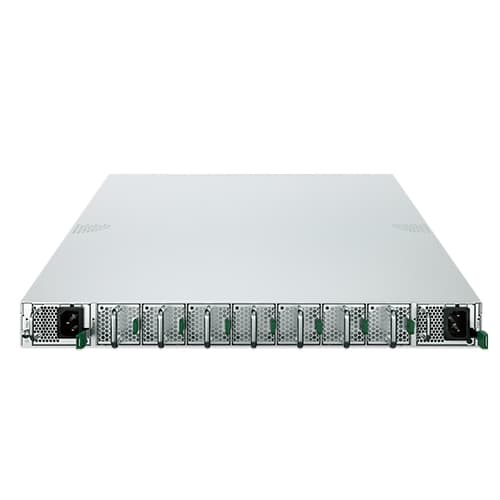
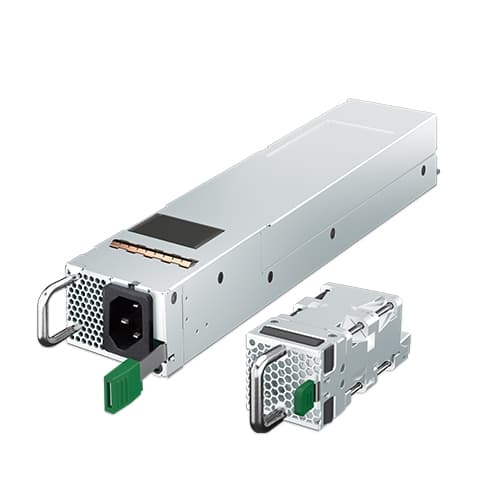
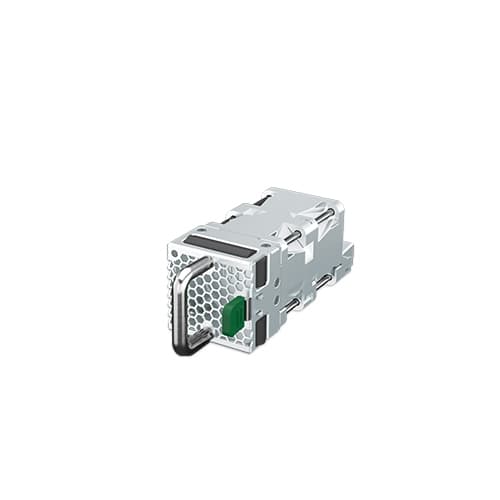
- 6+1 hot-pluggable fan modules
- Reset Button
- < 6 sec: System reboot > 6 sec: Factory default
- Enclosure
- Metal
- Installation
- 19-inch Rack-mount kit
- Dimensions (W x D x H)
- 440 x 630 x 44 mm, 1U height
- Weight
- 14.2kg
- ESD Protection
- ±8KV air gap discharge ±6KV contact discharge
- Power Requirements
- 100~240V AC, 50/60Hz Rated input current: 0~12A(100VAC) ; 0~10A(230VAC) Input voltage range: 180~310V Input current range: 0~10A
- Power Consumption
- System on with dual AC Max. 369 watts/1,259 BTU Full loading with dual AC Max. 1,396 watts/4,764 BTU
- Redundant Power System
- Dual power redundancy and redundant backup for two sets of fans (Include 2 power DCS-PWR1600-ACHDC) Hot-swappable power modules and fans
- LED Indicators
- System: Power ( Green ) Alarm ( Amber ) SYS ( Green ). System Boot Process ( Amber / Green twinkle alternately) AC Power (PSU) ( Green ) FAN ( Green ). Fan Failure ( Amber ) Diag ( Green ) Per 10/100/1000T RJ45 Port(Management Port): Speed (Right side): 10Mbps (Off) 100Mbps ( Amber ) 1000Mbps ( Green ) LNK/ACT(Left side): ( Green ) Per 400G QSFP-DD interfaces (Port-1 to Port-32) 100G LNK/ACT ( Amber ) 400G LNK/ACT ( Green ) Per 10G SFP+ interfaces (Port-33 to Port-34) 10G LNK/ACT ( Green )
- Switch Architecture
- Store-and-Forward
- Switch Fabric
- 25.6Tbps/non-blocking
- Throughput@64Bytes
- 5600Mpps@64Bytes
- ARP Table
- 96K
- Address Table
- 128K entries, automatic source address learning and aging
- IP Interfaces
- Max. 4K (4094) VLAN interfaces
- Routing Table
- IPv4 216K entries IPv6 108K entries
- Multicast Table
- 16K
- ACL Table
- 2048
- Shared Data Buffer
- 24MB
- Jumbo Frame
- 10K bytes
- Flow Control
- IEEE 802.3x pause frame for full duplex Back pressure for half duplex
- Flash
- 1G
- RAM
- 8GB
- IP Routing Protocols
- IPv4 hardware static routing IPv4 dynamic routing protocols RIPv1/v2, OSPFv2, IS-IS and BGP
- Multicast Routing Protocol
- IPv4 IGMP v1/v2/v3 PIM-DM/PIM-SM/PIM-SSM
- VRRP Group
- 255
- Routing Features
- IPv4 Route policy/IPv4 Policy-based routing BFD session binding static routes, VRRP, OSPF, BGP and RIP ECMP VRF (Virtual Routing and Forwarding) Multiple tunneling techniquesGRE Tunnel
- IP Routing Protocol
- IPv6 dynamic routing protocols RIPng, OSPFv3, IS-ISv6 and BGP4+ IPv6 hardware static routing
- Multicast Routing Protocol
- IPv6: PIM-SM v6
- Routing Features
- IPv6 hardware static routing IPv6 Route policy
- Tunneling
- Manual tunneling Automatic tunneling IPv4 over IPv6 tunneling ISATAP tunneling
- VxLAN
- VxLAN Layer 2 Switching, Routing Switching IPv4 over IPv6 Tunnel GRE Tunnel BGP EVPN (Ethernet Virtual Private Network) Priority Flow Control (PFC)
- MLAG
- Blackhole Flow Protection MLAG VRRP MLAG dual active
- MPLS
- Virtual Private Network Layer 2 Virtual Private Network Layer 3 Virtual Private Network VPLS VPWS Layered Service Provider Static MPLS TE RSVP-TE MPLS QoS LDP (Label Distribution Protocol)
- Port Configuration
- Port disable/enable Auto-negotiation 10/100/1000Mbps full and half duplex mode selection Flow control disable/enable Port link capability control
- Port Status
- Display each port’s speed duplex mode, link status, flow control status, auto-negotiation status, trunk status
- Mirror
- Port Mirror Flow Mirror Remote Mirror Multi-destination Mirror CPU as mirror source or destination Encapsulated Remote SPAN (ERSPAN)
- VLAN
- IEEE 802.1Q tagged VLAN Q-in-Q tunneling Subnet-based VLAN Protocol-based VLAN MAC-based VLAN Private VLAN (Protected port) Voice VLAN Super VLAN Guest VLAN GVRP Up to 4K VLAN groups
- Link Aggregation
- IEEE 802.3ad LACP/static trunk
- Spanning Tree Protocol
- IEEE 802.1D Spanning Tree Protocol IEEE 802.1w Rapid Spanning Tree Protocol IEEE 802.1s Multiple Spanning Tree Protocol BPDU Guard STP Root Guard
- Multicast
- IPv4 IGMP snooping v1, v2 and v3 IPv6 MLD snooping v1 and v2 MVR (Multicast VLAN Registration) DC-SCM(Control Multicast)
- Bandwidth Control
- Port-based bandwidth limitation Supports flow/VLAN-based bandwidth limiting (single-rate two-color, single-rate three-color, dual-rate three-color) Implements priority-based scheduling and priority mapping for flows
- Storm Control
- Implements DLF (Destination Lookup Failure) storm suppression Supports multicast storm suppression Supports broadcast storm suppression
- QoS
- Ingress shaper and egress rate limit per port bandwidth control 8 priority queues on all switch ports Traffic classification IEEE 802.1p CoS ToS/DSCP/IP Precedence of IPv4/IPv6 packets IP TCP/UDP port number Typical network application Strict priority and Weighted Round Robin (WRR) CoS policies Traffic-policing on the switch port DSCP remark RoCE v2: PFC(Priority-based Flow Control) ECN(Explicit Congestion Notification)
- UDLD
- Compatible with Cisco uni-directional link detection(UDLD)
- Ring
- Supports ERPS, and complies with ITU-T G.8032
- Ethernet OAM
- IEEE 802.3ah EFM EEE 802.1ag CFM ITU-T Y.1731OAM functions and mechanisms for Ethernet based network
- Authentication
- IEEE 802.1X port-based network access authentication Built-in RADIUS client to cooperate with the RADIUS servers AAA Authentication RADIUS/TACACS+ login user access authentication
- Access Control List
- IP-based ACL/MAC-based ACL ACL based on: MAC Address IP Address Ethertype Protocol Type VLAN ID DSCP 802.1p Priority Up to 512 entries
- ARP
- ARP Detection ARP Anti Attack Anti ARP Scan ARP Guard ARP Binding ARP Limit ARP Inspection
- MAC Security
- Static MAC MAC Filtering Blackhole MAC Lis
- Loging Filter
- Telnet/SSH ACL Filtering Telnet/SSH IPv6 ACL Filtering
- Security
- Port security for source MAC address entries filtering VLAN security for MAC address learning on VLAN DHCP snooping to filter distrusted DHCP messages IP source guard prevents IP spoofing attacks DoS attack prevention RBAC (Role Based Access Control) Link-Flapping detection
- DHCP Functions
- DHCP Client/Relay/Server DHCP Snooping DHCP Option 66/67 DHCP Option 82/252 DHCPv6 Client/Relay/Server DHCPv6 Snooping
- Basic Management Interfaces
- Console; Telnet; SNMP v1, v2c
- Secure Management Interfaces
- SSHv1.5/v2, SNMPv3
- System Management
- SNMP trap for system notification RMON (Remote Monitoring) NETCONF network management protocol System maintenance Firmware upload via TFTP Configuration upload/download through FTP/TFTP Hardware reset button for system reboot or reset to factory default Fan temperature control for automatic adjustment Temperature and fan monitoring with alerts SNTP Network Time Protocol (Simple Network Time Protocol) Network Time Protocol (NTP) sFlow v4/v5 DNS Client Status IPv4 ARP/ARP Proxy IPv6 ICMPv6/ Path MTU Discovery(PMTUD)/PPPoE+/ Neighbor Discovery Protocol (NDP)
- Log and Alarm
- CPU usage display and alarm Memory usage display and alarm Temperature, PSU, FAN, status display and alarm Operation logs Management of logs, alarms, and debugging information
- Network Diagnostic
- ICMPv6/ICMPv4 remote ping Trance Route DDM (Digital Diagnostic Monitor) Device Link Detection Protocol Bridge Protocol Filter Uplink Line Protection Protocol Loop detection to avoid broadcast loops
- SNMP MIBs
- RFC 1213 MIB-II RFC 2573 SNMP Target MIB RFC 2573 SNMP Notification MIB RFC 2819 RMON (1,2,3,9) RFC 2863 IF-MIB RFC 3414 User-based Security Model MIB RFC 3415 View-based Access Control Model (VACM) MIB RFC 3418 SNMPv2-MIB RFC 3635 Etherlike MIB RFC 4188 BRIDGE-MIB RFC 4293 IP-MIB RFC 4295 IPv6-ICMP-MIB RFC 4668 RADIUS Authentication Client MIB LLDP MIB
- Regulatory Compliance
- FCC Part 15 Class A
- Standards Compliance
- IEEE 802.3 10BASE-T Ethernet IEEE 802.3u 100BASE-TX Fast Ethernet IEEE 802.3ab 1000BASE-T Gigabit Ethernet IEEE 802.3ae 10Gbps Ethernet IEEE 802.3 400G Ethernet standard IEEE 802.3x flow control and back pressure IEEE 802.3ad port trunk with LACP IEEE 802.1D Spanning Tree Protocol IEEE 802.1w Rapid Spanning Tree Protocol IEEE 802.1s Multiple Spanning Tree Protocol IEEE 802.1p Class of Service IEEE 802.1Q VLAN tagging IEEE 802.1X Port Authentication Network Control IEEE 802.1ab LLDP IEEE 802.3ah OAM IEEE 802.1ag Connectivity Fault Management (CFM) RFC 768 UDP RFC 793 TCP RFC 791 IP RFC 792 ICMP RFC 2068 HTTP RFC 1112 IGMP v1 RFC 2236 IGMP v2 RFC 3376 IGMP v3 RFC 2710 MLD v1 RFC 3810 MLD v2 RFC 1058 RIP v1 RFC 2453 RIP v2 RFC 2328 OSPF v2 RFC 5340 OSPF v3 ITU-T G.8032 ERPS Ring ITU-T Y.1731 Performance Monitoring
- Operating
- Temperature: 0 ~ 50 degrees C Relative Humidity: 5 ~ 90% (non-condensing)
- Storage
- Temperature: -10 ~ 70 degrees C Relative Humidity: 5 ~ 90% (non-condensing)