
XGPL-16000 — 16-Port XGS-PON OLT with 8-Port 10G SFP+ + 2-Port 100G QSFP28
16-Port XGS-PON OLT with 8-Port 10G SFP+ + 2-Port 100G QSFP28
Confirma disponibilidad, instalación y entrega con un asesor.
Descripción
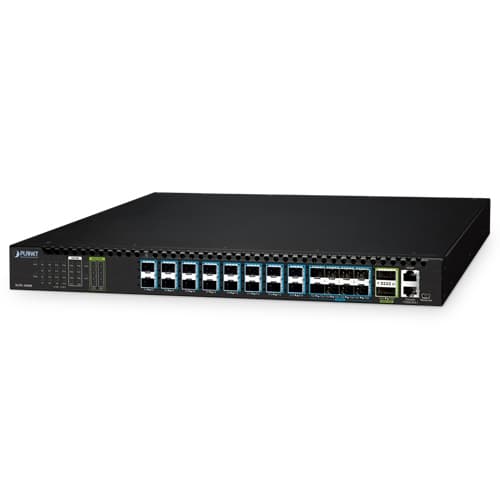
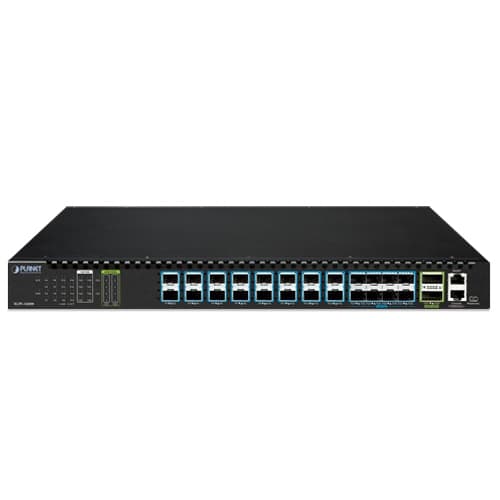
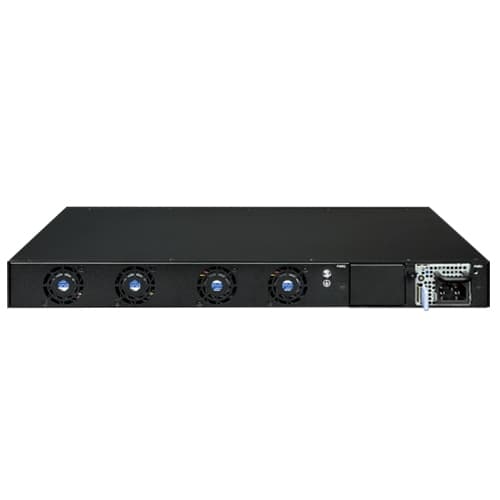
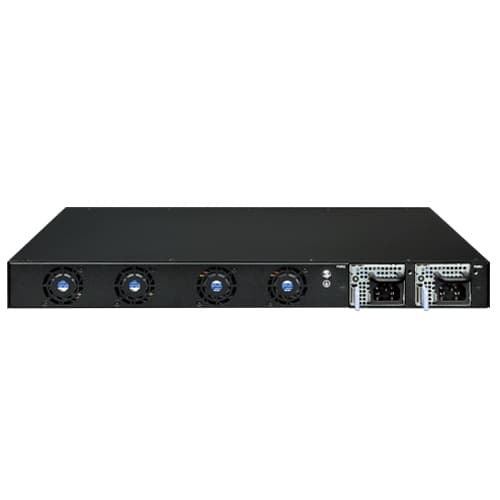
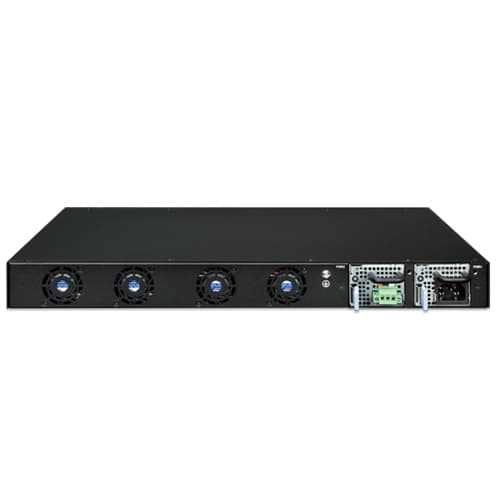
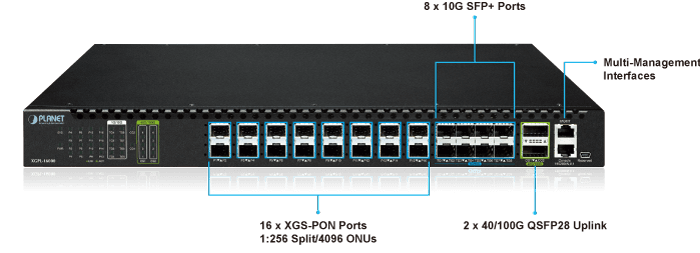
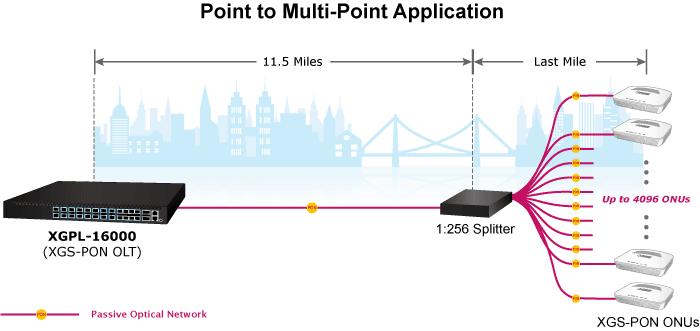
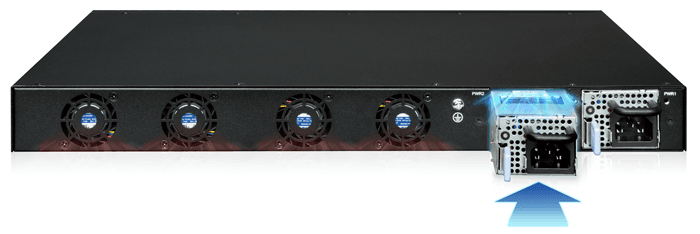
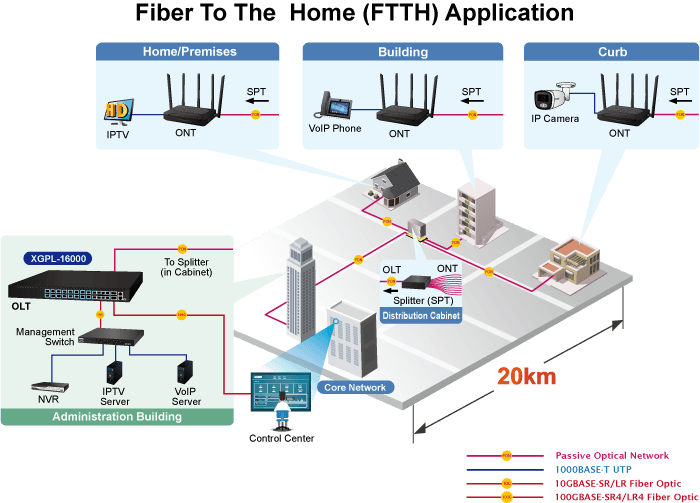
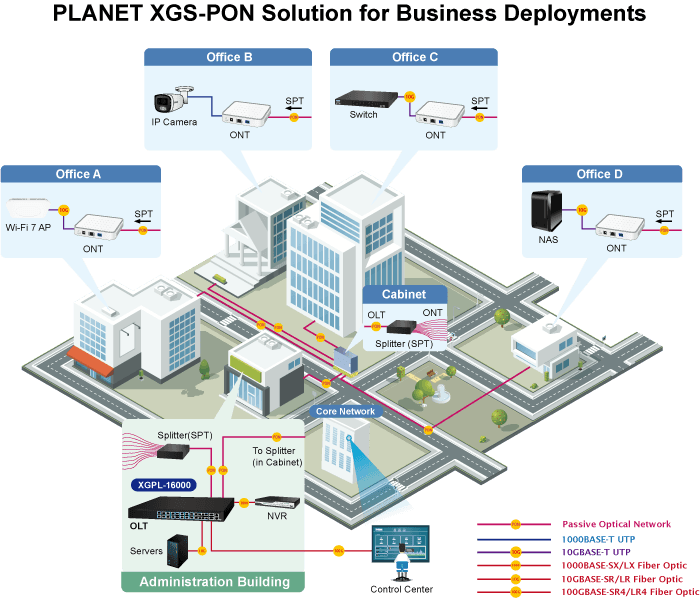
High-Performance 16-Port XGS-PON OLT with 40G/100G Uplink Capability PLANET XGPL-16000 is a high-density 16-Port XGS-PON Optical Line Terminal (OLT) designed for next-generation fiber broadband access networks. It integrates 16 XGS-PON ports, 8 10G SFP+ ports, and 2 40G/100G QSFP28 uplink ports, offering exceptional scalability and bandwidth aggregation for large-scale deployments. Key Features: 16 XGS-PON SFP slots with a 1:256 split ratio per port Two 40G/100G QSFP28 uplink interfaces for high-capacity backbone connectivity Eight 10G SFP+ ports for flexible service expansion or link redundancy Dual hot-swappable power supply (AC/DC/mixed) with front-to-back airflow Full L2/L3 features including VLAN, Q-in-Q, IGMP snooping, LACP, and RIP/OSPF Powerful QoS and SLA mechanisms with DBA per ONU CLI, SNMP, Telnet, and out-of-band management support High-capacity Aggregation and Access The XGPL-16000 supports a 1:256 split ratio per port, enabling access to up to 4096 ONUs in total. Each XGS-PON port provides symmetric 10Gbps downlink/uplink bandwidth, significantly outperforming legacy GPON systems. It supports N1/N2 XGS-PON transceivers and multiple GPON optical classes (B+/C+/C++/C+++/D+), making it backward compatible and deployment-flexible. Strong Standards Compatibility The XGPL-16000 is compliant with ITU-T G.9807/G.987/G.988 standards and adheres to China Telecom’s GPON Technical Specification CTC 2.0. It also supports Ethernet-II, IEEE 802.1Q VLAN, Q-in-Q, and LACP, ensuring interoperability with a wide range of equipment and ONUs. The system supports Layer 2 multicast protocols, including IGMP snooping and MLD snooping, ensuring smooth IPTV and video-on-demand service delivery. Powerful QoS and SLA Management The device supports comprehensive QoS mechanisms, including IEEE 802.1p, CoS, WRR, SP, and FIFO queue scheduling, ensuring differentiated service levels for various traffic types. It also features DBA (Dynamic Bandwidth Allocation) and SLA (Service Level Agreement) functions per ONU, providing precise bandwidth control and carrier-grade traffic assurance. Carrier-class Security and Reliability The XGPL-16000 offers advanced security features, such as ACL (Access Control List), port isolation, broadcast storm suppression, and data encryption over PON interfaces. The system supports Type B and Type C optical path protection, abnormal ONU emission detection, and trunk fiber link protection, ensuring fault tolerance and minimal downtime in critical networks. Modular, Redundant, and Eco-Friendly Design The XGPL-16000 adopts a modular dual-power-slot design, supporting hot-swappable AC, DC, or mixed AC/DC power modules. The fan system uses a front-to-back airflow layout, optimized for rack-mounted deployments. It supports EMC level 3, operates under harsh temperature and humidity conditions, and provides low-noise and low-power operation to meet long-term deployment needs in data centers and equipment rooms. Flexible and Efficient Management The device offers multiple management interfaces, including CLI (console), Telnet, SNMP, and out-of-band Ethernet management. It supports TFTP remote software upgrade, debugging output, system logs, and batch ONU provisioning. With strong system maintainability and remote operation capabilities, it ensures simplified network operation and management (OAM). Applications Flexible 10G XGS-PON Solution for FTTH and Enterprise Applications Designed for both high-density residential areas and multi-building commercial deployments, the XGPL-16000 offers a high-capacity, carrier-grade fiber access solution. Each of its 16 XGS-PON ports supports a 1:256 split ratio, enabling connection of up to 4096 ONUs through a single chassis. Equipped with 100G uplink capability, the XGPL-16000 ensures reliable, high-throughput backhaul for a wide range of services—ranging from 4K/8K video streaming, IPTV, and VoIP for FTTH users, to IP surveillance, secure data access, and seamless enterprise connectivity in business environments. Its high scalability and symmetric 10Gbps bandwidth make it the ideal solution for ISPs, system integrators, and enterprises looking to deploy robust next-generation fiber networks. Key Features XGS-PON Ports 16 XGS-PON OLT SFP slots, backward compatible with XG-PON and GPON transceivers Up to 10Gbps symmetric downstream and upstream Maximum transmission distance of up to 20km Each PON port supports up to 256 ONT/HGU Compliant with ITU-T G.9807, G.987 and G.988 Physical Ports Eight 10GBASE-SR/LR SFP+ slots Two 40G/100G QSFP28 uplink slots RJ45 to DB9 console interface for system setup and management One 10/100BASE-TX out-of-band management port OLT Management User-friendly CLI, Telnet, and SNMP management 2 control interfaces: Out-of-Band IP – via dedicated management port In-Band IP – via SFP+ and QSFP28 uplinks Supports ONT/HGU authentication to prevent unauthorized ONU access ONU/HGU Management ONU/ONT port control VLAN configuration per ONT Supports DBA (Dynamic Bandwidth Allocation) SLA (Service Level Agreement) per ONU IP Routing Features Supports dynamic routing protocol: RIP and OSPF IPv4 static routing Routing interface provides per VLAN routing mode Layer 2 Features Supports VLAN IEEE 802.1Q tag-based VLAN Provider Bridging (VLAN Q-in-Q, IEEE 802.1ad) supported GVRP for dynamic VLAN management Supports Link Aggregation 802.3ad Link Aggregation Control Protocol (LACP) Cisco ether-channel (static trunk) Supports Spanning Tree Protocol STP, IEEE 802.1D (Classic Spanning Tree Protocol) RSTP, IEEE 802.1w (Rapid Spanning Tree Protocol) MSTP, IEEE 802.1s (Multiple Spanning Tree Protocol, spanning tree by VLAN) Port mirroring to monitor the incoming or outgoing traffic on a particular port (many to 1) Supports G.8032 ERPS (Ethernet Ring Protection Switching) Loop protection to avoid broadcast loops Link Layer Discovery Protocol (LLDP) Quality of Service Ingress shaper and egress rate limit per port 8 priority queues per port IEEE 802.1p CoS VLAN ID priority DSCP/Precedence Policy-based QoS on ingress/egress Multicast Supports IPv4 IGMP snooping v1, v2 and v3 Supports IPv6 MLD snooping v1 and v2 Querier mode support MVR (Multicast VLAN Registration) Security Authentication IEEE 802.1x port-based network access authentication Built-in RADIUS client to cooperate with the RADIUS servers RADIUS/TACACS+ users access authentication Access Control List IP-based Access Control List (ACL) MAC-based Access Control List (ACL) Time-based ACL DHCP Snooping to filter distrusted DHCP messages Dynamic ARP Inspection discards ARP packets with invalid MAC address to IP address binding IP Source Guard prevents IP spoofing attacks Management IPv4 and IPv6 dual stack management Switch Management Interfaces Console and Telnet Command Line Interface HTTP web switch management SNMP v1 and v2c switch management SSHv2, SSLv3, TLSv1.0 and SNMP v3 secure access SNMP Management Four RMON groups (history, statistics, alarms, and events) SNMP trap for interface Link Up and Link Down notification Built-in Trivial File Transfer Protocol (TFTP) client BOOTP and DHCP for IP address assignment System Maintenance Firmware upload/download via HTTP Dual images DHCP Functions: DHCP Relay DHCP Option 82 DHCP Server User Privilege levels control Network Time Protocol (NTP) and SNTP Network Diagnostic SFP-DDM (Digital Diagnostic Monitor) ICMP remote IP ping Syslog remote alarm System Log
Especificaciones técnicas
- XGS-PON Ports
- 16, supporting Class B+/C+/C++/C+++/D+ XGS-PON/GPON transceivers
- 10GBASE-X SFP+ Slots
- 8, supporting 10GBASE-SR/LR SFP+ transceiver Backward compatible with 1GBASE-X SFP transceivers
- 100G QSFP28 Ports
- 2-port 100G QSFP28 Backward compatible with 40G QSFP+
- Management Port
- One 10/100BASE-TX RJ45 port
- Console
- One RJ45-to-RS232 serial port (115200, 8, N, 1)
- RAM
- 2048MB
- Flash Memory
- 4096MB
- Dimensions (W x D x H)
- 442.5 x 280 x 44.6 mm
- Weight
- 4,600g with single modular power supply
- Power Consumption
- 120 watts/409.56BTU
- Power Requirements - AC
- 100~240V AC, 1.5A max.
- Power Requirements - DC
- 36~72V DC, 3A max.
- Fan
- 4 Fans, Front-to-back airflow
- Switch Architecture
- Store-and-forward
- Switch Fabric
- 176Gbps
- Address Table
- 128K
- ARP Table
- 36K
- ACL Table
- Max. 3840 for IPv4 Max. 1920 for IPv6
- Shared Data Buffer
- 2MB
- Jumbo Frame
- 9KB
- Flow Control
- Back pressure for half duplex IEEE 802.3x pause frame for full duplex
- Transmission Speed
- Downstream: 10Gbps; Upstream: 10Gbps (XGS-PON) Downstream: 10Gbps; Upstream: 2.5Gbps (XG-PON) Downstream: 2.5Gbps; Upstream: 1.25Gbps (GPON)
- Optical Split Ratio
- Up to 256 per port
- Transmission Distance
- 20km
- PON Module Wavelength
- XG(S)-PON: TX 1577nm / RX 1270nm GPON: TX 1490nm / RX 1310nm
- PON Fiber Type
- 9/125um SMF (Single mode fiber optic)
- IP Interfaces
- Up to 1K VLAN interfaces, shared by both IPv4 and IPv6
- Routing Table
- 8K for IPv4 20K for IPv6
- Routing Protocols
- Static Routing RIP OSPF BGP IS-IS VRRP
- Port Configuration
- Port disable/enable Flow control disable/enable Bandwidth control on each port Port loopback detect
- Port Mirroring
- TX/RX/Both Many to 1
- VLAN
- IEEE 802.1Q tag-based VLAN, up to 4K VLAN groups IEEE 802.1ad Q-in-Q VLAN stacking/tunneling Flexible Q-in-Q GVRP for VLAN management
- Spanning Tree Protocol
- IEEE 802.1D Spanning Tree Protocol (STP) IEEE 802.1w Rapid Spanning Tree Protocol (RSTP) IEEE 802.1s Multiple Spanning Tree Protocol (MSTP)
- Multicast
- IPv4 IGMP v1/v2/v3 snooping IPv4 Querier mode support IGMP Filtering and IGMP Throttling IGMP Proxy reporting IGMP multicast forwarding IPv6 MLD v1/v2 snooping Multicast VLAN Register (MVR) Up to 3840 multicast groups
- Link Aggregation
- IEEE 802.3ad Ling Aggregation Control Protocol (LACP) Static trunk link aggregation Supports 64 groups with 16 ports per trunk group Up to 80Gbps bandwidth (full duplex mode) Load Balance Algorithm: Source IP/destination IP/Source + destination IP Source MAC/destination MAC/Source + destination MAC
- Storm Control
- Per 100pps 1-14880
- Bandwidth Control
- Supports rate limiting per ONU / per port At least 64Kbps stream Dynamic Bandwidth Allocation (DBA) on PON ports Supports SLA (Service Level Agreement)
- QoS
- PON interfaces: Dynamic Bandwidth Allocation (DBA) Service Level Agreement (SLA) Limiting the upstream/downstream rate based on each ONT/ONU/HGU 8 priority queues on all switch ports Scheduling for priority queues Weighted Round Robin (WRR) Strict priority Traffic classification: IEEE 802.1p CoS/DSCP/Precedence VLAN ID Policy-based ingress and egress QoS
- Ring
- ITU-T G.8032 ERPS Ring
- Access Control List
- Supports Standard and Expanded ACL IP-based ACL MAC-based ACL Time-based ACL ACL based on: MAC Address IPv4/IPv6 IP Address Protocol-number Sport/dport ToS/Precedence Up to 1k entries
- Security
- Transmission data encryption on the PON interface MAC limitation MAC sticky Port isolation DHCP snooping Dynamic ARP inspection IP source guard
- AAA
- TACACS+ and IPv4/IPv6 over RADIUS
- Network Access Control
- IEEE 802.1x port-based network access control
- System Configuration
- Console and Telnet Web browser SNMP v1, v2c
- Secure Management Interfaces
- SSHv2, SSLv3 Maximum 8 sessions for SSH and telnet connection
- System Management
- IPv4 and IPv6 dual stack management SNMP MIB and TRAP SNMP RMON 1, 2, 3, 9 four groups Firmware upgrade by HTTP/TFTP/FTP protocol through Ethernet network Configuration upload/download through HTTP/TFTP/FTP protocol Supports IEEE 802.1ab LLDP protocol NTP and SNTP client RADIUS authentication for IPv4/IPv6 login user name and password
- Event Management
- Remote syslog System log
- SNMP MIBs
- RFC 1213 MIB-II RFC 1215 Internet Engineering Task Force RFC 1271 RMON RFC 1354 IP-Forwarding MIB RFC 1493 Bridge MIB RFC 1643 Ether-like MIB RFC 1907 SNMPv2 RFC 2011 IP/ICMP MIB RFC 2012 TCP MIB RFC 2013 UDP MIB RFC 2096 IP forward MIB RFC 2233 if MIB RFC 2452 TCP6 MIB RFC 2454 UDP6 MIB RFC 2465 IPv6 MIB RFC 2466 ICMP6 MIB RFC 2573 SNMPv3 notification RFC 2574 SNMPv3 VACM RFC 2674 Bridge MIB Extensions
- Regulatory Compliance
- CE, FCC, LVD
- Standards Compliance
- IEEE 802.3z Gigabit 1000BASE-SX/LX IEEE 802.3ae 10Gb/s Ethernet IEEE 802.3x flow control and back pressure IEEE 802.3ad port trunk with LACP IEEE 802.1D Spanning Tree Protocol IEEE 802.1w Rapid Spanning Tree Protocol IEEE 802.1s Multiple Spanning Tree Protocol IEEE 802.1p Class of Service IEEE 802.1Q VLAN tagging IEEE 802.1X port authentication network control IEEE 802.1ab LLDP RFC 768 UDP RFC 793 TFTP RFC 791 IP RFC 792 ICMP RFC 2068 HTTP RFC 1112 IGMP v1 RFC 2236 IGMP v2 RFC 3376 IGMP v3 RFC 2710 MLD v1 RFC 3810 MLD v2 ITU-T G.9807.1 (XGS-PON) ITU-T G.987 (XG-PON) ITU-T G.988 (ONU Management and Control Interface)
- Operating
- Temperature: 0 ~ 50 degrees C Relative Humidity: 5 ~ 90% (non-condensing)
- Storage
- Temperature: -10 ~ 70 degrees C Relative Humidity: 5 ~ 90% (non-condensing)